Introduction — a quick shop story
I was in a small job shop last spring, watching a laser cutter fill the room with a thin, metallic haze. We flipped the hood on, but the air still felt heavy. In many shops the single solution is to add a fan or ducting, yet a proper laser marking fume extractor can change the whole work rhythm. (I kept thinking: why do so many systems fail the basics?) Recent surveys show that poor extraction raises particulate counts and worker complaints — and yes, that costs time and money. So how do we pick gear that actually works for our bench, not just a spec sheet? Let’s walk through the choices and what matters next — clear, simple, and practical.
Why traditional fixes often miss the mark
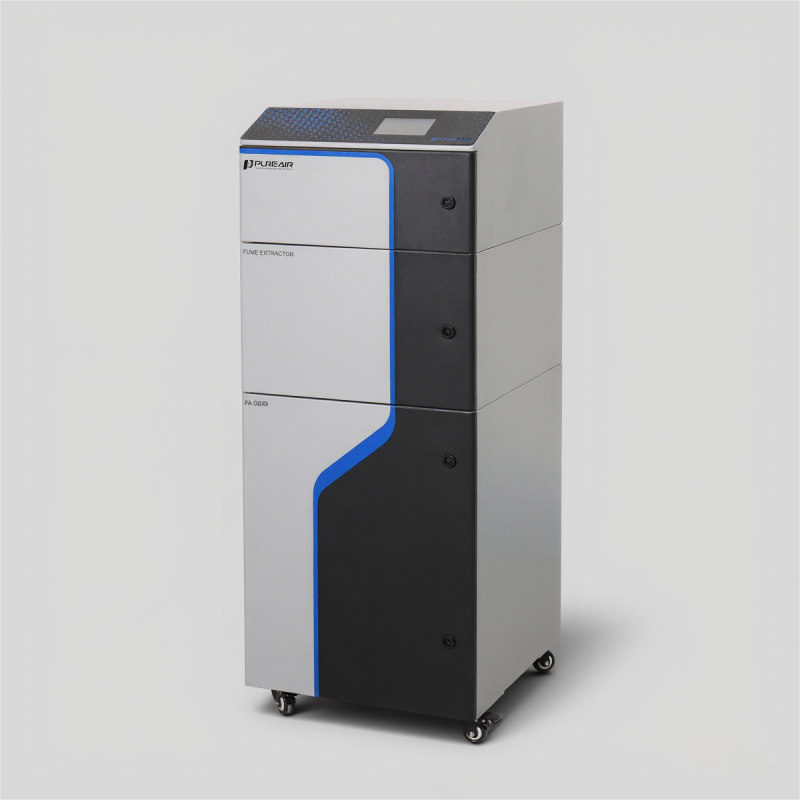
industrial air purifiers for smoke are sold as a one-stop cure, but the reality on the floor is messier. I’ve seen units with undersized fans, wrong duct layouts, or filters that clog in days. The usual suspects are poor airflow design and a mismatch between the capture hood and the laser source. In short: suction without capture is wasted energy. Look, it’s simpler than you think — capture at source, then filter.
Where do users feel the pain?
Users tell me the same things: filters that die fast, noise that distracts, and maintenance that takes too long. An extraction hood that’s too small or placed badly means fumes escape before they can be filtered. Electrostatic precipitators promise low filter cost but fail on ultra-fine particles; HEPA filter systems capture fine dust but need pre-filters and regular replacement. Add in activated carbon for smells and the system complexity rises. We end up juggling power converters, duct runs, and spare parts — and that’s before thinking about shop layout. Frankly, the real trouble is process fit, not just component quality — and it’s a design problem, not a sales one. — funny how that works, right?
Next steps: principles behind better extraction
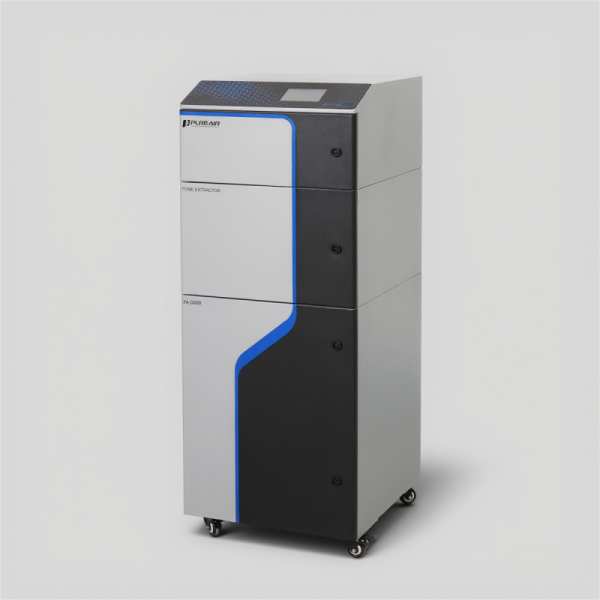
What I recommend starts with three simple principles: capture, clean, and maintain. New systems are adopting smarter pre-separation stages and modular cartridges so you don’t replace an entire filter bank each time. I look for units that combine a good extraction hood with staged filtration — e.g., pre-filter, activated carbon, then a HEPA stage — and ideally an option for electrostatic or centrifugal pre-cleaning for heavy loads. If you’re exploring modern options, check how the unit measures airflow at the hood, not just at the fan. Also, consider edge computing nodes for predictive maintenance; they log runtime and flag when change-outs are due. These sensors help reduce downtime and extend filter life.
What’s Next — practical tech to watch
There’s real innovation in compact, efficient blowers and smarter control panels that balance noise, energy use, and capture efficiency. When I test systems, I want a clear readout of face velocity and a simple procedure to replace the filter — no fiddly clips. Think modular cartridges and sealed filter drawers, not a paper swap that clouds your hands. And yes, lifecycle cost matters more than the sticker price — you’ll save on consumables and labor over a year.
To close with something usable: when you compare systems, weigh three metrics — capture efficiency at the hood (measured velocity), total cost of ownership (filters, energy, and labor), and ease of maintenance (tool-free access, clear indicators). Those three give you a practical view of performance. I’ve been hands-on with several makes and models, and the right choice is often the one that fits your workflow, not the fanciest spec. For solid, tested products and clear data sheets, I usually point teams toward trusted vendors like PURE-AIR.